Why Fitness Community Beats Willpower in Dallas
Fitness Community, Group Training, Dallas Strength Gym
Why Your Fitness Community Matters More Than Willpower
Willpower is finite and unreliable. Belonging to a community that expects you creates sustainable consistency far better than personal motivation alone — a pattern backed by decades of social psychology research on commitment, social support, and how humans actually change their behavior over time.
You’ve probably heard it before: “If you really wanted it, you’d just show up.” It sounds tough and motivating, but it quietly blames you every time life gets messy, work runs late, or your energy tanks. The truth is, motivation naturally rises and falls. That doesn’t make you weak; it makes you human. Relying on sheer willpower is like relying on caffeine alone to get through every day — it works for a while, then you crash. What doesn’t crash so easily is belonging. When you’re part of a real fitness community in Dallas that expects to see you, remembers your name, and notices when you’re missing, showing up stops being a solo battle. It becomes something you do with people, not just for yourself.
Why Willpower Is a Terrible Fitness Strategy
Most Dallas residents who keep starting and stopping gym routines don’t suffer from a character flaw; they suffer from a strategy problem. The common strategy is: “I’ll just push myself harder next week.” But research on decision fatigue and ego depletion shows that our mental energy for self-control is limited. After a day of work, errands, and responsibilities, asking yourself to “just be more disciplined” is like asking your phone to run on 1% battery all evening. Eventually, it shuts down — and your workout plans do, too. Studies on self-control have repeatedly found that when people are tired, stressed, or overwhelmed, their ability to rely on willpower alone drops sharply. That’s why so many well-intentioned workout plans fade by week three. It’s not that you don’t care. It’s that no one can white-knuckle their way to long-term consistency. You need a structure that supports you when your motivation dips.
The Science of Social Commitment
Here’s where community changes everything. Social psychology research on social facilitation shows that we tend to perform better — and try harder — when we’re around others, especially when we share a common goal. In simple terms: working out with others often leads to more effort and better adherence than going it alone. People lift a little heavier, finish the last reps, and stay more consistent when they know others are alongside them. A supportive strength training community doesn’t just cheer; it quietly shapes your behavior. You’re more likely to show up because your workout isn’t an isolated chore. It’s part of a shared rhythm. This is the heart of group fitness motivation: you feel pulled forward by the energy in the room, not pushed by guilt or self-criticism. Over time, that pull is what helps you build a habit that sticks.
How Community Creates Consistency
One of the biggest questions we hear is how to stay consistent with workouts when life keeps interrupting. The answer isn’t more self-criticism; it’s gentle accountability in fitness. In a strong fitness community, people notice when you’re there — and when you’re not. Not in a shaming way, but in a “Hey, we missed you Tuesday. You good?” kind of way. That simple human check-in can be the difference between disappearing for three months and coming back after a tough week. Consistency grows when you know someone will notice your effort. You’re no longer just skipping a workout; you’re missing a chance to see people who support you, ask about your day, and genuinely care that you feel stronger. Over time, this turns workouts from a task on your to-do list into a meaningful part of your week — a place where you’re expected, welcomed, and encouraged.
💡 Quiet but powerful truth: Most people don’t quit fitness because they hate lifting. They quit because they feel alone in it. Community fixes that.
What Makes a Fitness Community Actually Work
Not every gym community feels the same. A space can be crowded and still feel lonely. For a fitness community in Dallas to truly work, it needs to be small enough and personal enough that people genuinely know you. That means coaches greet you by name, notice when you hit a personal record, and remember when you’ve been nursing a sore shoulder or a stressful week. It means other members recognize your face, celebrate your PRs, and share that little nod across the room that says, “We’re in this together.” A real strength training community doesn’t revolve around selfies or competition; it revolves around shared progress. When someone adds five pounds to their squat, people clap. When you come back after time away, no one rolls their eyes. They say, “Glad you’re here.” Those small moments are what transform a gym into a place you actually want to keep coming back to.
The Barbell Club Community — What It Actually Looks Like
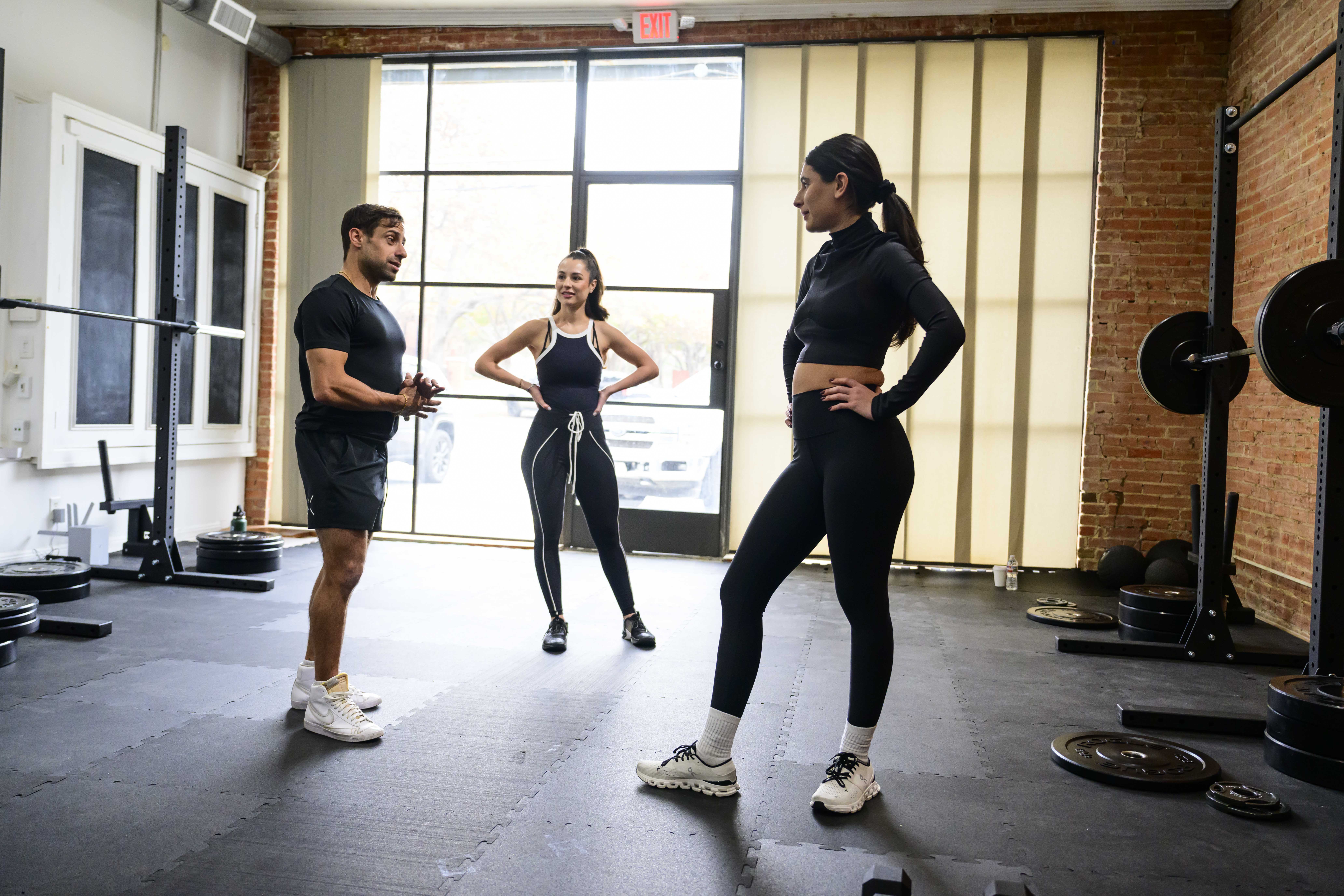
At The Barbell Club on 3112 Swiss Ave in Old East Dallas, our classes are intentionally small and strength-focused. This isn’t a giant, anonymous warehouse where you disappear on the back row. It’s a Dallas neighborhood gym where the coaches know your name, your current numbers, and your goals. During a session, you’ll see members cheering when someone grinds through the last reps of a heavy set. You’ll hear genuine clapping when a member hits their first unassisted pull-up or adds weight to their deadlift. Because classes are capped, coaches can walk the floor, coach your technique, and still have the space to ask, “How are you feeling today?” It’s common to see people hanging around after class, talking about their week, asking for tips, or just enjoying that post-lift high together. This is what group fitness motivation looks like in real life: shared effort, shared celebration, and a sense that you’re part of something bigger than your own workout.
Accountability Without Judgment
We believe in accountability in fitness, but not the harsh, shaming kind that makes you dread walking through the door. At The Barbell Club, accountability looks like this: your coach notices when you’ve been consistent and celebrates it. If you miss a session or two, you might get a friendly message checking in, not calling you out. Members cheer each other on without comparing bodies or numbers. We know life happens — kids get sick, work gets busy, energy dips. You’ll never be judged for being human. Instead, we focus on helping you come back, not punishing you for stepping away. This kind of accountability feels more like support than pressure. It’s the difference between “You’d better show up” and “We’d love to see you.” And that softer, kinder approach is often what makes people in our Dallas strength training community stay consistent for the long haul.
Frequently Asked Questions
What if I’m introverted or shy?
If you’re introverted, you’re not alone — many of our members are, too. You’re never forced to be the center of attention or make small talk if you don’t want to. You can focus on your lifts, listen to coaching, and gradually get to know people at your own pace. Belonging here doesn’t mean being loud; it means being welcomed as you are.
Will people judge me if I’m new or out of shape?
No. Many members at our fitness community in Dallas started exactly where you are — nervous, unsure, and maybe coming back after a long break. We celebrate effort, not perfection. Coaches scale movements to your level, and other members remember what it felt like to be new. The unspoken rule is simple: we all started somewhere, and starting is something to be proud of.
Do I have to be social for this to work?
You don’t have to be chatty or outgoing to benefit from group fitness motivation. Simply being in the room — lifting alongside others, hearing the encouragement, and sharing the same training plan — is enough to feel the difference. Some members make close friends; others simply enjoy familiar faces and a friendly nod. Both are valid ways to belong.
How big is the community and the classes?
Our community is intentionally kept to a size where we can still recognize faces and remember names. Classes are capped so coaches can give you real attention — not just shout cues from across a crowded room. That’s what allows The Barbell Club to feel like a true Old East Dallas neighborhood gym, not a faceless fitness factory.
Will lifting heavy make me bulky or is this for all levels?
Our strength training community includes beginners, seasoned lifters, and everyone in between. Programming is tailored so you can start where you are and progress safely. Lifting builds strength, confidence, and muscle, but “bulky” isn’t the default. Your coach will help you set goals that match how you want to feel and move, not someone else’s idea of fitness.
Conclusion: Belonging Beats Willpower Every Time
If you’ve been wondering how to stay consistent with workouts, it might be time to stop asking, “What’s wrong with my willpower?” and start asking, “Who’s in my corner?” A supportive fitness community in Dallas can do what raw motivation can’t: carry you through the weeks when life is heavy, energy is low, and excuses feel loud. At The Barbell Club on Swiss Ave, we’ve seen over and over that when people feel seen, supported, and genuinely welcomed, they don’t just work out — they grow, they stay, and they start to enjoy the process. You don’t have to do this alone, and you don’t have to become a different kind of person to belong here. You just have to take the first step through the door.
Come meet the community that’ll make you want to show up. Book your free strength class at The Barbell Club in Dallas. [Book Here]