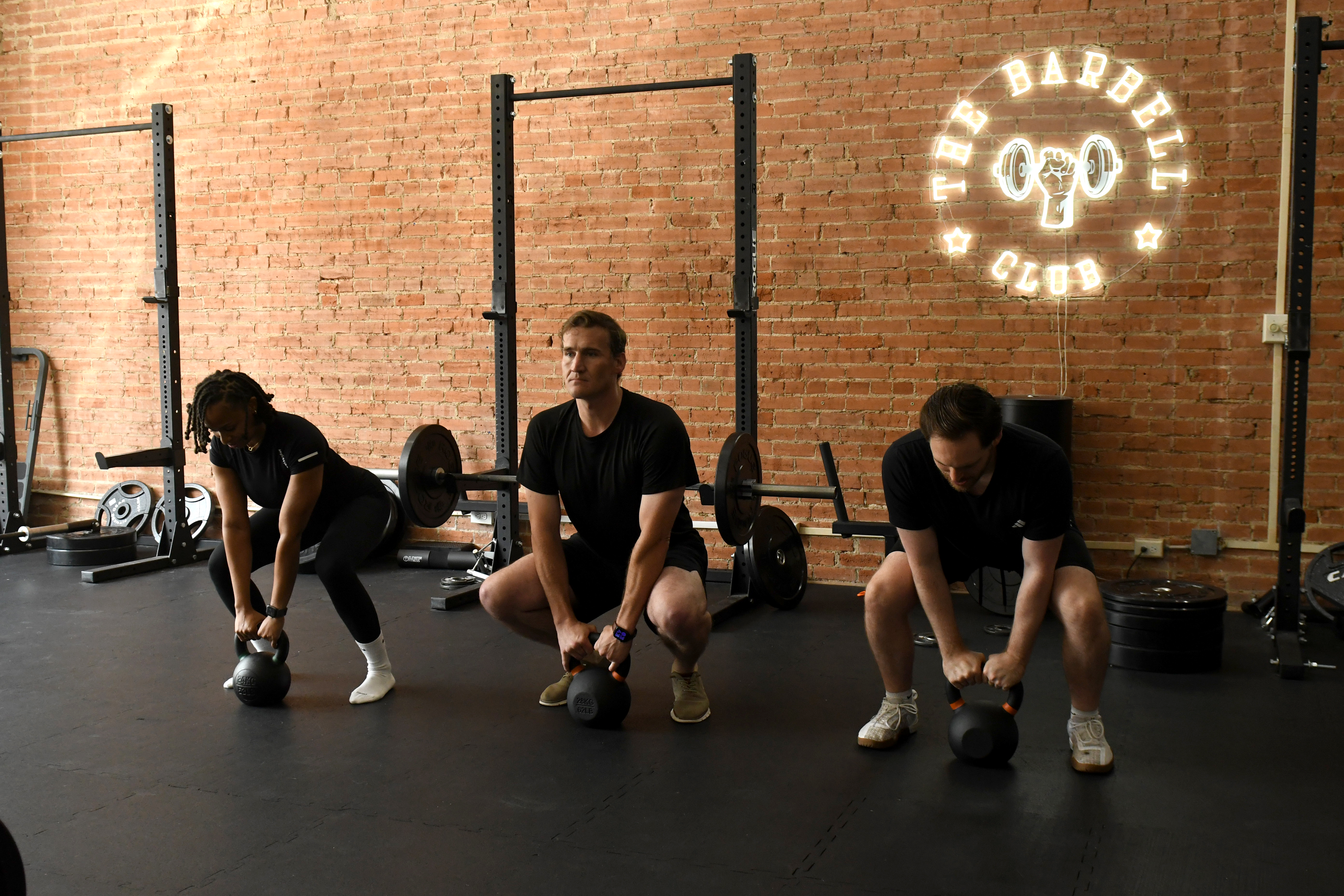
Beginner's Guide to Safe Lifting Form
Fitness, Beginner Strength Training Dallas
Beginner's Guide to Perfect Lifting Form: The Safety-First Approach
Perfect lifting form starts with learning each movement pattern using light weights or even just bodyweight, while a coach watches and gently corrects you. From there, you add weight slowly and only as your form stays solid, so strength and confidence grow without unnecessary injury risk.
If you’re new to strength training, it’s completely normal to worry about getting hurt. Many Dallas beginners walk into The Barbell Club on Swiss Ave saying, “I’m scared I’ll do it wrong.” That fear makes sense — heavy weights and unfamiliar movements can feel intimidating. The good news: when you start with smart coaching, light loads, and a clear plan, strength training becomes one of the safest and most empowering things you can do for your body. This guide will walk you through proper lifting form for beginners, step by step, so you can start training with confidence instead of fear.
Why Form Matters Before Weight
When you’re eager to get stronger, it’s tempting to ask, “How much weight should I lift?” At The Barbell Club, we start with a different question: “How well can you move?” Weight comes later. First, we build the movement pattern itself — like learning the alphabet before writing sentences.
Good form protects your joints, muscles, and spine. Poor form can shift stress into the wrong places, especially your lower back, knees, or shoulders. That doesn’t mean you’re fragile; it just means your body deserves smart mechanics. Think of form as your body’s “user manual” for lifting safely and efficiently.
There’s also a nervous system piece. Every rep you do teaches your brain and muscles how to work together — this is called your neuromuscular foundation. Early on, using lighter weights lets your brain learn the pattern without being distracted by how heavy the bar feels. Over a few weeks, this turns awkward, “I feel uncoordinated” movements into smooth, automatic ones. That’s when adding weight becomes both safe and satisfying.
The 4 Fundamental Movement Patterns Every Beginner Must Learn
Whether you train at a big-box gym or in our small-group sessions in East Dallas, almost every strength exercise is a version of four basic patterns: squat, hip hinge, push, and pull. Master these with light weights, and you’ll have a strong base for everything else.
The Squat
Setup cues: Stand with feet about shoulder-width apart, toes slightly turned out. Grip the bar (or hold a dumbbell at your chest), keep your chest tall, and gently brace your core like you’re about to cough. Imagine your whole foot pressing into the floor — heel, big toe, little toe.
Execution: Sit your hips down and slightly back, as if you’re lowering onto a chair. Knees track in line with your toes. Go as low as you can while keeping your chest up and heels down, then drive through your feet to stand back up, squeezing your glutes at the top without leaning back.
Common mistakes: Heels lifting, knees collapsing inward, chest dropping forward, or rushing through reps. These usually happen from trying to go too heavy too soon or not knowing where to shift your weight.
Coaching cue: “Push the floor away.” This keeps you balanced and helps your knees and hips move together.
The Hip Hinge / Deadlift
Setup cues: Stand with feet hip-width apart, bar over the middle of your foot. Hinge your hips back like you’re closing a car door with your butt, keeping a soft bend in the knees. Grip the bar just outside your legs, flatten your back, and keep your neck neutral, eyes slightly ahead of you on the floor.
Execution: Drive your feet into the ground, standing up tall while keeping the bar close to your legs. At the top, stand straight with your ribs stacked over your hips. To lower, push your hips back first, then bend your knees once the bar passes them. The movement should feel like loading your hamstrings and glutes, not your lower back.
Common mistakes: Rounding the back, bar drifting away from the body, yanking the bar off the floor, or “squatting” the deadlift instead of hinging at the hips. These are fixable with lighter weight and a few targeted cues.
Coaching cue: “Show me your logo on your shirt.” This reminds you to keep your chest proud and spine neutral.
The Push (Bench or Overhead)
Setup cues (bench): Lie on the bench with feet planted on the floor. Grip the bar slightly wider than shoulder-width, wrists straight over elbows. Lightly squeeze your shoulder blades together and down into the bench, creating a stable base for your shoulders.
Execution (bench): Lower the bar under control toward the mid-chest, keeping elbows at about a 45-degree angle from your body. Press the bar back up in a straight line, keeping your shoulders packed into the bench the whole time — no bouncing off your chest.
For overhead pressing, stand tall, squeeze your glutes, brace your core, and press the weight straight overhead, finishing with your biceps roughly in line with your ears.
Common mistakes: Flaring elbows out wide, bouncing the bar, arching the lower back too much, or letting the bar drift away from the body. These can irritate shoulders or lower back over time if not corrected.
Coaching cue: “Drive through your feet, not just your arms.” This keeps your whole body engaged and stable.
The Pull (Row or Pulldown)
Setup cues: For rows, hinge forward slightly at the hips with a flat back or sit tall on a bench or machine. Grip the handle or bar, keep your chest open, and let your shoulders relax forward slightly at the start so you can move through a full range of motion.
Execution: Initiate the pull by drawing your shoulder blades back and together, then bend your elbows to bring the weight toward your ribcage or upper chest. Control the weight back to the start, letting your shoulder blades move instead of staying rigid. You should feel this mostly in your upper back, not your biceps only.
Common mistakes: Shrugging shoulders toward the ears, rounding the upper back, yanking the weight with momentum, or letting the head jut forward. These habits are common but easy to correct with a lighter load and focused reps.
Coaching cue: “Put your shoulder blades in your back pockets.” This encourages a strong, stable upper back position.
The 3-Stage Form Mastery Timeline
Everyone progresses at a different pace, but most beginners in our East Dallas small-group classes follow a similar rhythm. Here’s what form-focused strength training can look like in your first few weeks.
Weeks 1–2: Pattern Learning at Light Weight
In your first couple of weeks, the goal is simple: learn how to start lifting. We use bodyweight, dowels, or very light barbells and dumbbells. You’ll do more practice reps with plenty of rest, while your coach talks you through each movement and adjusts your stance, grip, and posture. Expect to feel a bit awkward — that’s normal and temporary.
Weeks 3–4: Refinement and Consistency
As your body starts to remember the patterns, we gradually increase the weight while keeping form as the top priority. You’ll notice your balance improving, your bar path getting smoother, and cues clicking faster. This is where many beginners in Dallas realize, “I actually like lifting — it feels good to move well.”
Weeks 5+: Progressive Loading and Confidence
With solid technique in place, we start to lean into progressive overload — slowly adding weight, sets, or reps over time. Because your form is reliable, heavier lifts feel challenging but not scary. This is where strength training for beginners in Dallas shifts from “I hope I don’t get hurt” to “I’m proud of how strong I’m becoming.”
Common Form Mistakes and How to Fix Them
Mistake Why It Happens Risk Fix Rounding the back in deadlifts Weight too heavy, bar too far from shins, weak brace Extra stress on lower back and discs Lighten load, keep bar close, practice hip hinge with dowel Knees caving in during squats Weak hips, narrow stance, not focusing on knee path Knee irritation over time Use lighter weight, think “push knees out,” adjust stance width Shoulders shrugging on presses Trying to “muscle” the weight up with neck and traps Neck tightness, shoulder discomfort Reset shoulder blades down, use lighter load, slow tempo Using momentum on rows Weight too heavy, chasing numbers over control Lower back strain, less muscle engagement Drop weight, pause at chest, keep torso stable
Why Coaching Accelerates Form Mastery
Mirrors can show you part of what’s happening, but they can’t see everything — and they can’t talk back. A trained coach notices details you’ll miss: how your knees track, whether your ribs are flaring, if your grip is uneven, or if your breathing is working against you instead of with you.
In our small-group sessions at The Barbell Club on Swiss Ave, your coach has eyes on your whole lift, from your feet to your head. They’ll give you one or two simple cues at a time — not a flood of criticism. The goal is never to make you feel wrong; it’s to help each rep feel a little better than the last. That’s how beginners go from nervous to confident surprisingly quickly.
Frequently Asked Questions
Here are some of the most common questions we hear from people starting beginner strength training in Dallas.
Will I get sore?
Some mild soreness is normal, especially in the first couple of weeks as your muscles wake up to new work. You should not feel sharp pain or anything that makes you worry you’re injured. We program your first sessions at The Barbell Club conservatively, so you feel worked but not wrecked.
Is it normal to feel awkward at first?
Absolutely. Every lifter you see moving confidently once felt exactly like you do now. Awkwardness is just your brain learning new patterns. With patient coaching, that feeling fades quickly — usually within a few sessions — as your body starts to recognize and repeat the movements.
How long until I can lift heavy?
“Heavy” is different for everyone, but most beginners can start adding noticeable weight within 3–5 weeks, once the basics of beginner lifting form feel consistent. We’ll increase load only when your technique says you’re ready, not when your ego (or someone else’s) says you should rush.
What if I have a past injury?
Many of our members in East Dallas come in with old knee, back, or shoulder issues. We start by asking detailed questions, watching how you move, and adjusting exercises to your current ability. Sometimes that means changing range of motion, using different equipment, or modifying the load. The goal is to strengthen you around your history, not ignore it.
Should I use a mirror when I lift?
Mirrors can give quick visual feedback, but they’re not enough on their own. You can’t see your back angle, bar path, or subtle shifts in your knees. That’s where coaching comes in. At The Barbell Club, we may use mirrors occasionally, but we rely more on teaching you how good form feels, not just how it looks.
Start Your Strength Journey the Safe Way in Dallas
If you’ve been putting off strength training because you’re worried about getting hurt or doing it wrong, you’re exactly who we built The Barbell Club for. Our small-group, coach-led sessions at 3112 Swiss Ave in Dallas, TX 75204 are designed to teach beginner lifting form patiently, step by step, with zero judgment.
Form mastery starts with your first class. Book a free strength class at The Barbell Club — we’ll assess your baseline, explain how to start lifting safely, and build your foundation the right way from day one. [Book Here] and take the first, confident step into beginner strength training in Dallas.